Gee's Bend Quilters: African American Quilting History in Denim
The Legacy Stitched in Denim:
Why the Gee’s Bend Quilters are Modern Art Masters
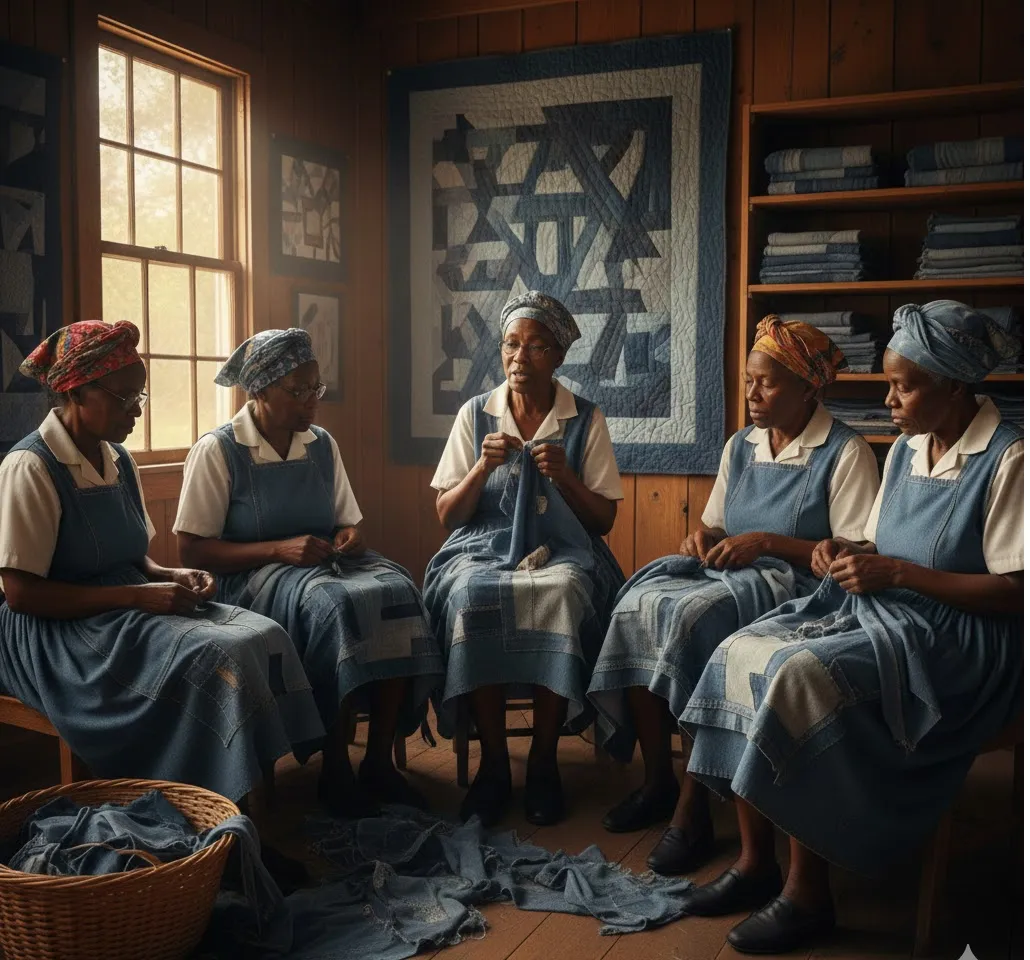
African American quilting history has few chapters as extraordinary as Gee's Bend. In a small, geographically isolated community in Alabama, generations of Black women created quilts so structurally bold, so compositionally daring, that when the art world finally saw them in 2002, critics reached for comparisons to Mondrian and Klee. But the Gee's Bend quilters were not following any Western art movement. They were doing something older and more deeply rooted — they were making beauty from what they had, and meaning from where they came from.

Photo Credit: The New York Times
The Gee’s Bend quilts aren't just beautiful; they are tangible records of history, creativity, and survival. As a curator at the National Gallery of Art points out, these creations came from profound necessity. The women used what they had: tattered clothes, leftover denim, corduroy, and scraps from the fields. It was the scarcity of materials, coupled with a radical, intuitive design sense, that birthed an artistic style unlike any other. They didn't follow conventional patterns; they followed the lines of life, creating bold, asymmetrical compositions that the New York Times famously declared were "Some of the most miraculous works of modern art America has produced."
To truly appreciate this quilting legacy, we must look back to its roots. The tradition itself is often traced to an enslaved woman named Dinah Miller, who was brought to the Pettway plantation in 1859. She planted the seed of a tradition that would germinate for generations. Can you imagine the strength of a craft passed down through great-grandmothers, each stitch carrying the memory, pain, and hope of those who came before? The continuity of their work is a magnificent testament to the enduring human spirit.

When I look at their abstract, yet deeply personal textile art, I see echoes of African fabrics and design principles—a connection that is often noted by art historians. For instance, some of the checkerboard and striped designs are strikingly reminiscent of Ghanaian Kente cloth. This connection reminds me that the quilting tradition in the African diaspora is not just an adaptation, but a continuation of a profound cultural language.
Today, the younger generations of Pettway cousins are picking up the needle, ensuring this quilting tradition doesn't become a lost art. As Mary Margaret Pettway, one of the elder quilters, says, there is a deep peace found in the rhythm of hand-stitching—a sense of being close to their ancestral roots.

For us, the Quilt Africa Fabrics community, the Gee’s Bend story offers a vital lesson: your materials, no matter how humble, possess inherent value. Your unique perspective, born from your own journey and heritage, is the most powerful element in your design. Whether you are using luxury African wax prints or repurposed denim, remember that you are not just making a quilt; you are documenting your story, building a legacy, and contributing to the dynamic future of modern quilting. Now, what masterpiece will you stitch next?
Inspired by the resilience and artistry of the Gee’s Bend quilters? Now it’s your turn to stitch your own story into a living legacy.
Download the Free Guide: Before You Cut - 6 Things Every Quilter Needs To Know About Quilting With African Wax Prints https://quiltafricafabrics.com/before-you-cut-african-fabrics
Join our Facebook Group: https://web.facebook.com/groups/quiltafricafabrics/
Explore more from Quilt Africa Fabrics

Join us on YouTube for the full Uncut Live experience: https://youtube.com/@quiltafricafabrics

Explore more high quality African fabrics here: https://quilt-africa-fabrics.myshopify.com/collections

Be sure to follow us on our socials to keep updated on our latest deals and events:

Facebook: https://www.facebook.com/quiltafricafabrics/
Facebook Group: https://www.facebook.com/groups/quiltafricafabrics/?_rdc=1&_rdr##
Instagram: https://www.instagram.com/miriam_quiltafricafabrics


