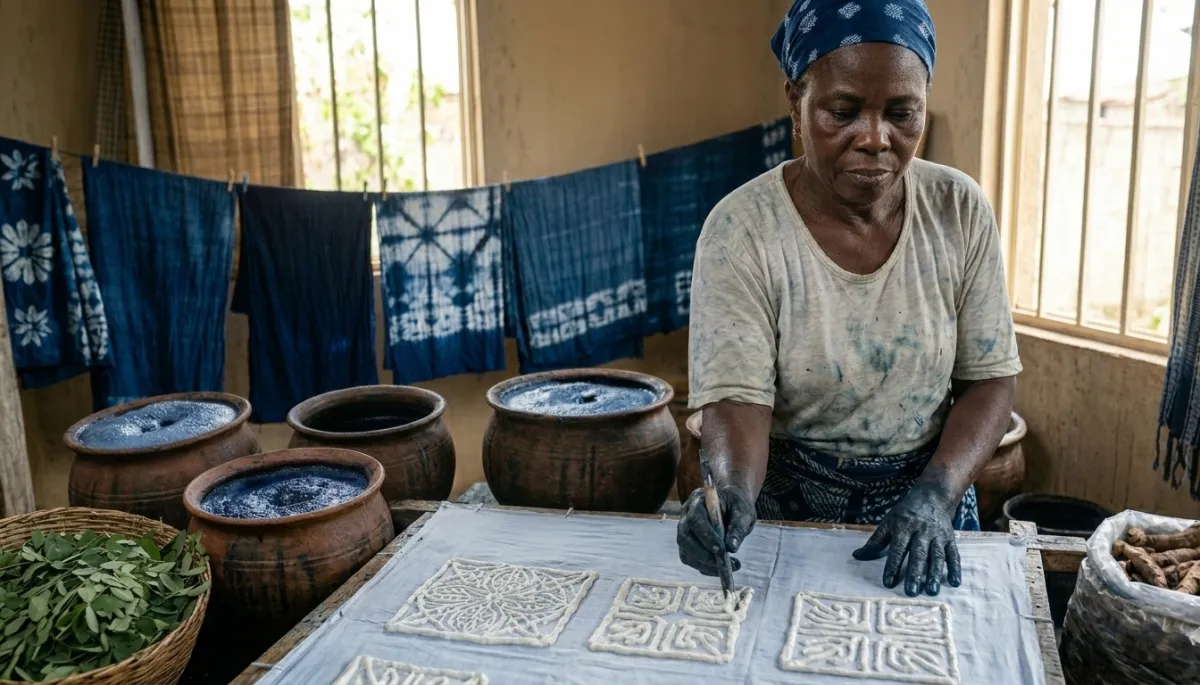
A Yoruba textile artist in a sunlit Nigerian workshop applying white cassava paste resist to cotton fabric, surrounded by traditional indigo fermentation vats and hanging deep blue Adire cloths.

The Art and Chemistry of Adire Indigo Cloth

March 04, 20263 min read

From Cassava to Color:

Unpacking the Art and Chemistry of Adire Indigo Cloth

While the world often fixates on the electric colors of modern wax prints, I want to draw your attention to a textile that speaks in the profound, calming, and deeply rooted color of the earth: Adire. This is the traditional resist-dyed cloth of the Yoruba people of Nigeria, and its creation is a mesmerizing blend of artistry, natural science, and community tradition.

For those of us who love textiles, seeing an authentic Adire piece is like hearing a slow, ancient chant—it has a soul that is hard to replicate.

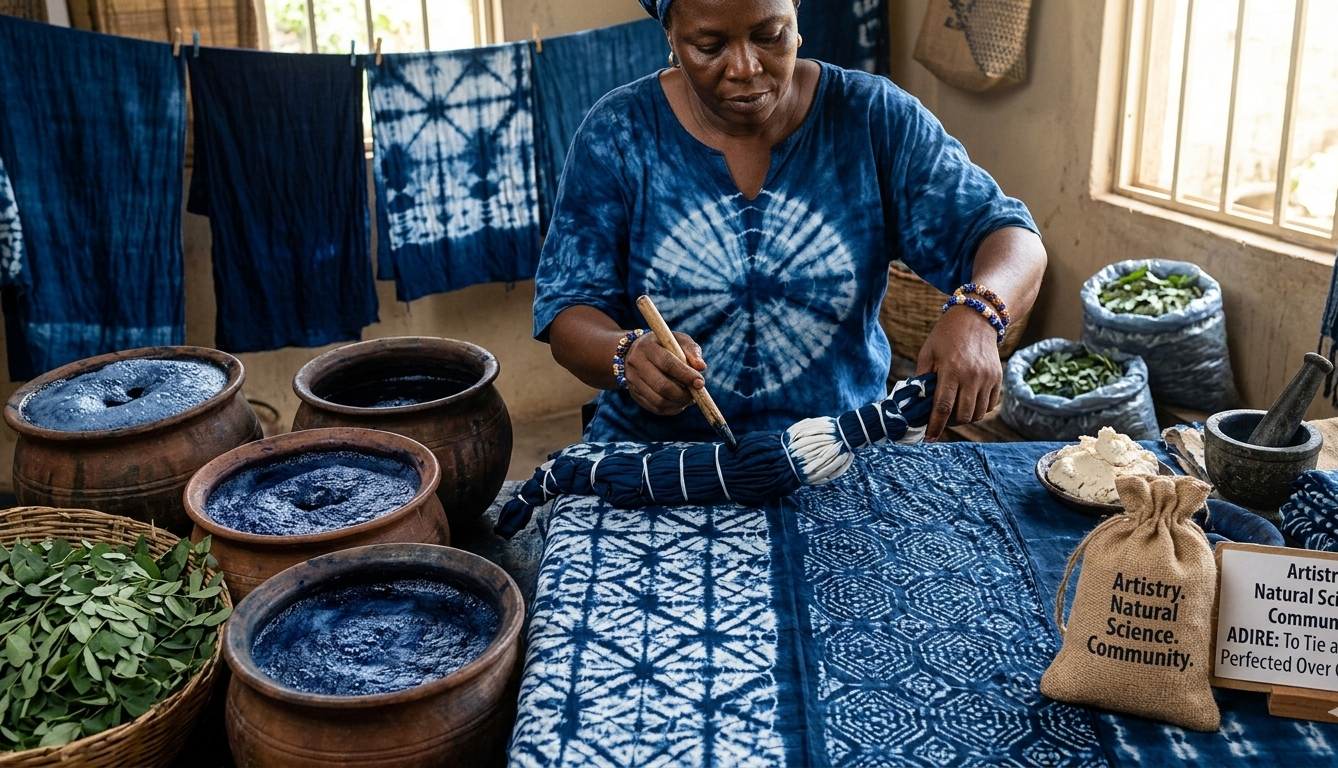
Adire literally means "to tie or bind" (as in resist-dyeing). The entire process, from sourcing the dye to applying the pattern, is a testament to sustainable, thoughtful textile creation that has been perfected over centuries.

Traditional West African woven textiles featuring colorful Ghanaian Kente cloth, Nigerian Akwete fabric with intricate geometric patterns, and striped Yoruba Aso-Oke displayed on a wooden table.

The Indigo Magic: Chemistry in the Hands of the Maker

The soul of Adire is indigo. Unlike many dyes that simply stain the fabric surface, indigo is special because it requires a fascinating chemical process.

  • The Vat: Indigo dye doesn't work when exposed directly to air. The dye master must create a living fermentation vat—a chemical cocktail often involving ingredients like wood ash, iron filings, and sometimes even something starchy like cassava flour or yams to feed the necessary bacteria.

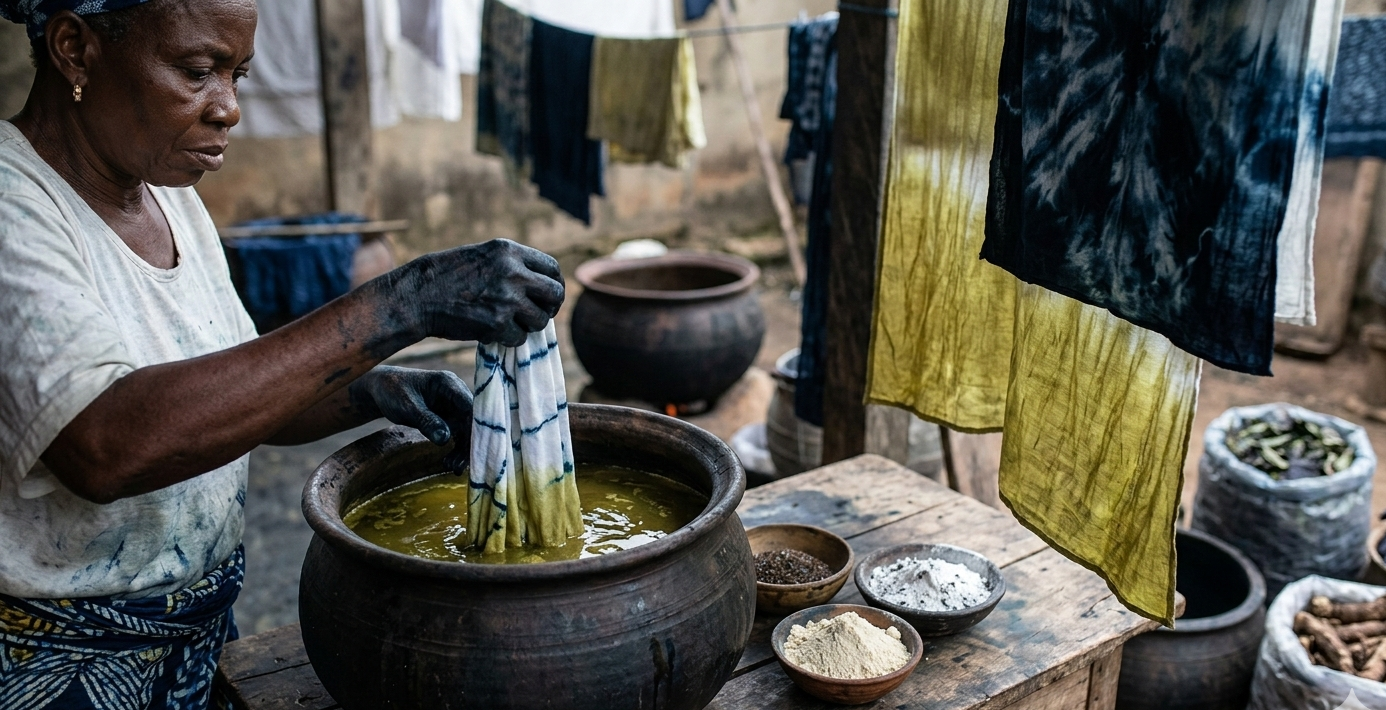
  • The Transformation: When white cotton cloth is dipped into this reduced, colorless (or yellowish) liquid, it comes out looking yellowish-green. Only when the cloth is pulled out and exposed to the oxygen in the air does the magic happen: the dye molecules oxidize and turn the rich, deep, almost blue-black shade we recognize.
Traditional Ghanaian Kente cloth woven on narrow horizontal looms by Ashanti and Ewe artisans, featuring symbolic geometric patterns and kaleidoscopic colors like gold for wealth and red for passion.

The Art of the Resist

The pattern is created before the dipping by resisting the dye in certain areas. The two primary methods are:

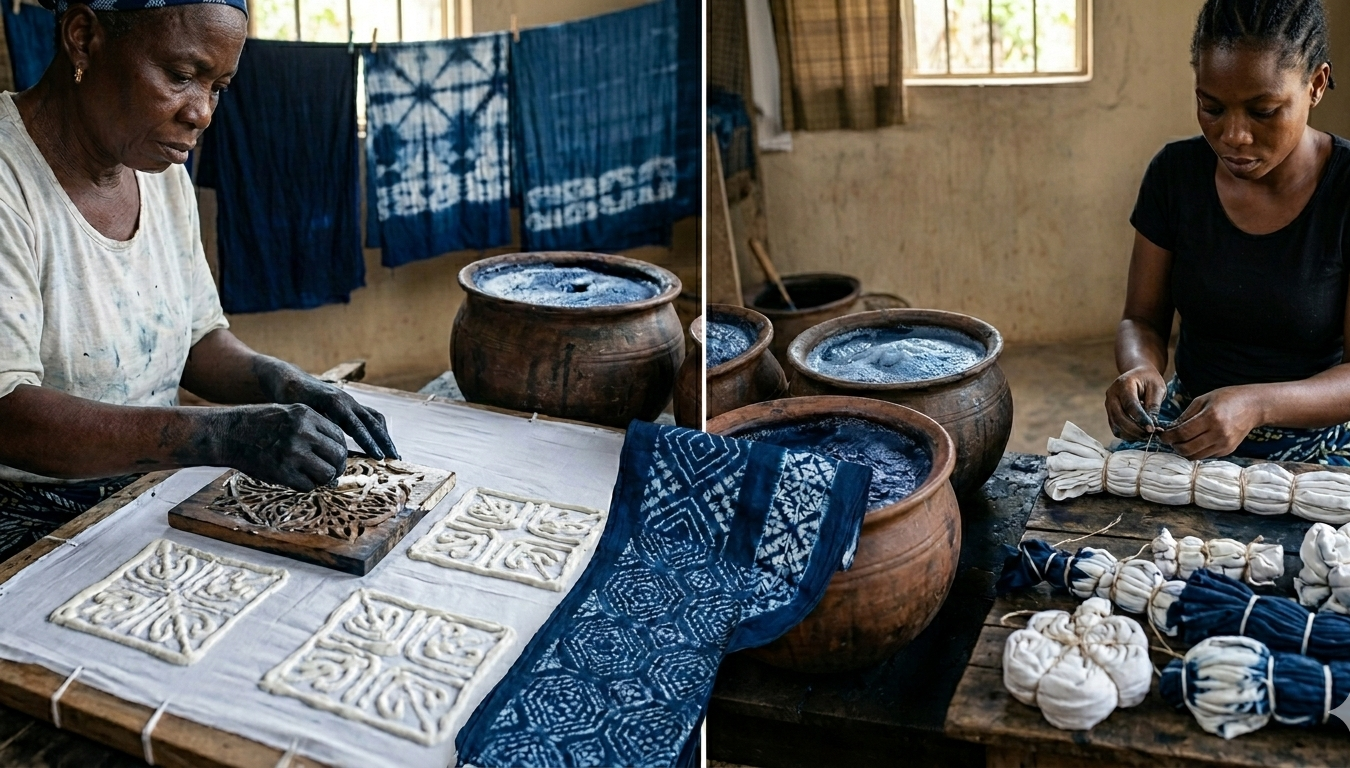
  • Stenciling (Adire Eleko): Artists use paste made from eludi (a starchy substance, sometimes cornstarch or cassava paste) applied through intricately carved wooden stencils onto the fabric. The paste blocks the indigo from touching the cloth, leaving white or the original pale color behind.

  • Tying and Folding (Adire Alabere): Similar to Shibori, the cloth is tightly tied, knotted, or folded, and the bound sections resist the dye, creating complex geometric patterns when unfolded.
Yoruba people at a celebration wearing traditional Aso-Oke outfits including an Agbada and elaborate Gele headties, showcasing the structured texture and bold vertical stripes of the "superior cloth" from Nigeria.

When you look at the subtle, organic patterns of an Adire fabric, you are looking at a textile that was literally built by chemistry and human intention working in perfect harmony. It reminds us that our tools—whether modern sewing machines or ancient dye vats—are only as powerful as the vision of the hands guiding them.


The MLK "The African Echo" Quilting Workshop

How do we stitch a legacy of hope into a blueprint for the future?

In honor of Dr. Martin Luther King Jr., we are hosting a special workshop that bridges the gap between ancestral tradition and Afrofuturist vision. Using our signature "African Echo" quilt as our guide, we’ll explore how bold African textiles and intentional stitching can amplify Dr. King’s dream for a liberated tomorrow.

Join Here: https://quiltafricafabrics.com/drking-workshop

Echoes of Heritage BOM 2026 African-inspired quilt combining heritage motifs, modern appliqué, and storytelling through fabric.

👉 Start your journey with 2026 BOM Echoes of Heritage here:

https://bom.quiltafricafabrics.com/2026-bom-home

Echoes of Heritage BOM 2026 African-inspired quilt combining heritage motifs, modern appliqué, and storytelling through fabric.


Explore more from Quilt Africa Fabrics


A blog header graphic with the text “Insight Meets Inspiration—Join Miriam Galadima Benson and Dynamic Voices in the Quilting Community,” featuring vibrant African textiles and quilting elements that highlight creativity, culture, and community.

Join us on YouTube for the full Uncut Live experience: https://youtube.com/@quiltafricafabrics

African Fabrics

Discover Adire Story Cloths


Each fabric tells a tale. Handcrafted by Yoruba artisans, our authentic Adire Batik fabrics bring heritage, beauty, and inspiration to your quilting and sewing projects. Perfectly curated to carry tradition into your creative journey.

https://quilt-africa-fabrics.myshopify.com/collections/the-story-cloths-adire-african-batik

African Fabrics

Explore more high quality African fabrics here: https://quilt-africa-fabrics.myshopify.com/collections

Quilting Workshop

Learn From Leo Ransom Here: https://workshop.quiltafricafabrics.com/home-leo-ransom

African Fabrics Care

Learn Here: https://workshop.quiltafricafabrics.com/care-of-african-fabrics-every-quilter

summit speaker

What an incredible gathering it was!

The Quilt Africa Summit 2025 brought together quilters from all over the world for 3 unforgettable days of inspiration, creativity, and connection. From hands-on workshops and live demonstrations to vibrant showcases of African fabrics, the summit truly celebrated the artistry and stories woven into every stitch. 🌍🧵

💻 You can still experience the magic! All sessions and replays are available for you to watch inside the Summit Portal.

👉 Start your summit review here:

https://summit.quiltafricafabrics.com/2025-international-summit

Quilt Africa International Summit Experience

Be sure to follow us on our socials to keep updated on our latest deals and events:

Quilt Africa Fabrics

Facebook: https://www.facebook.com/quiltafricafabrics/

Facebook Group: https://www.facebook.com/groups/quiltafricafabrics/?_rdc=1&_rdr##

Instagram: https://www.instagram.com/miriam_quiltafricafabrics

As an African who was not familiar with the process of modern day quilting, Miriam was fascinated with photos of the beautiful quilts displayed in Pinterest. 

This led her to take the plunge and create her first quilt  in 2016, using online resources as there are no quilt shops in her country. 
As an architect, the creative process of quilting was familiar and she loved the fact that she could incorporate her culture. 

The process of creating that first quilt using the fabrics of her heritage led to the start of her business, Quilt Africa Fabrics. 

The scarcity of resources on quilting with African Fabrics was the deciding factor in birthing the African Fabrics Movement and launching the annual Quilt Africa Fabrics Online Show and the virtual Quilt Africa Fabrics Guild/BOM.
She considers herself honored and blessed  to be accepted by the quilting community.

She views her business as a vehicle for introducing and supplying the beautiful, bold and exciting fabrics of Africa to quilters and textile artists the world over. 

Miriam lives in Abuja, the capital city of Nigeria in Western Africa with her husband and 3 children who are very much a part of the African Fabrics Movement.

Miriam Galadima Benson

As an African who was not familiar with the process of modern day quilting, Miriam was fascinated with photos of the beautiful quilts displayed in Pinterest. This led her to take the plunge and create her first quilt in 2016, using online resources as there are no quilt shops in her country. As an architect, the creative process of quilting was familiar and she loved the fact that she could incorporate her culture. The process of creating that first quilt using the fabrics of her heritage led to the start of her business, Quilt Africa Fabrics. The scarcity of resources on quilting with African Fabrics was the deciding factor in birthing the African Fabrics Movement and launching the annual Quilt Africa Fabrics Online Show and the virtual Quilt Africa Fabrics Guild/BOM. She considers herself honored and blessed to be accepted by the quilting community. She views her business as a vehicle for introducing and supplying the beautiful, bold and exciting fabrics of Africa to quilters and textile artists the world over. Miriam lives in Abuja, the capital city of Nigeria in Western Africa with her husband and 3 children who are very much a part of the African Fabrics Movement.

Instagram logo icon
Youtube logo icon
Back to Blog