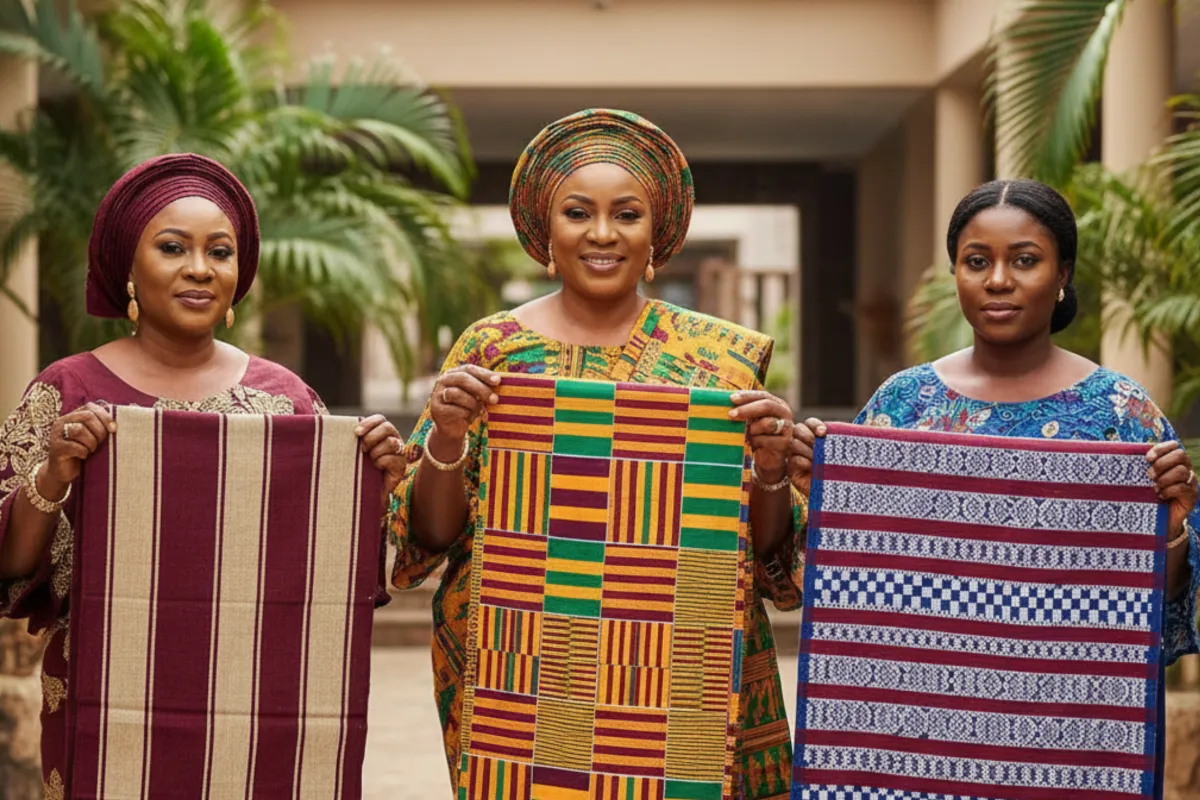
Three Nigerian women presenting hand-woven West African fabrics: a burgundy striped Aso-Oke, a vibrant kaleidoscopic Ghanaian Kente, and a blue geometric Akwete cloth.

Nigerian and Ghanaian Textile Heritage: Kente, Akwete, and Aso-Oke

February 20, 20264 min read

Nigerian and Ghanaian Textile Heritage:

Kente, Akwete, and Aso-Oke

These three woven textiles are among the most revered in West Africa. While all are esteemed for their intricate patterns and cultural depth, they come from distinct groups, each with its own techniques and symbolic language.

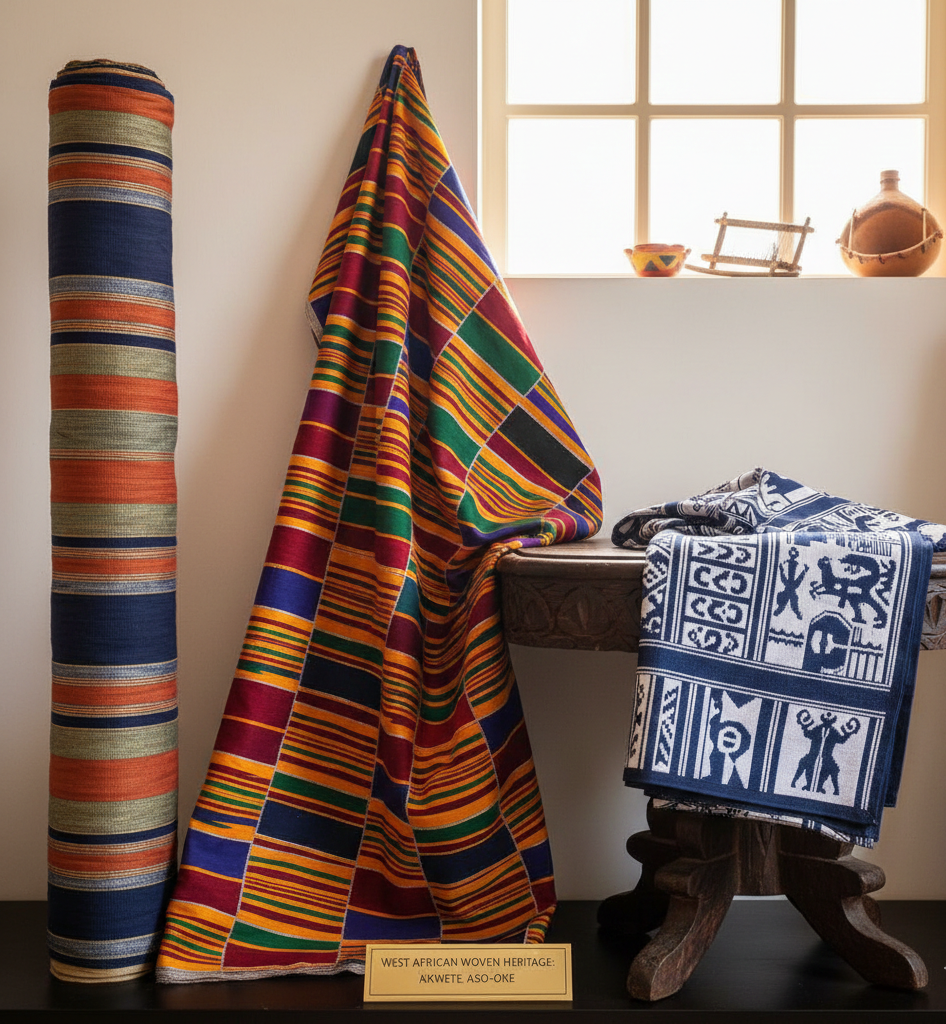
Traditional West African woven textiles featuring colorful Ghanaian Kente cloth, Nigerian Akwete fabric with intricate geometric patterns, and striped Yoruba Aso-Oke displayed on a wooden table.

1. Kente Cloth (Ghana - Ashanti and Ewe Peoples) 🇬🇭

Kente is perhaps the most globally recognized, originating primarily with the Asante (Ashanti) and Ewe peoples of Ghana.

  • Technique: Woven on narrow horizontal looms, Kente is famous for being composed of long, narrow, hand-woven strips that are meticulously sewn together side-by-side to form the final cloth.

  • Aesthetics: It is known for its brilliant, highly symbolic, kaleidoscopic color combinations and geometric patterns.

  • Symbolism: Nearly every color and pattern combination has a specific meaning, often conveying proverbs, historical events, or philosophy. For example, gold symbolizes status and wealth, while red can represent bloodshed or passion. The entire cloth is a form of visual language.
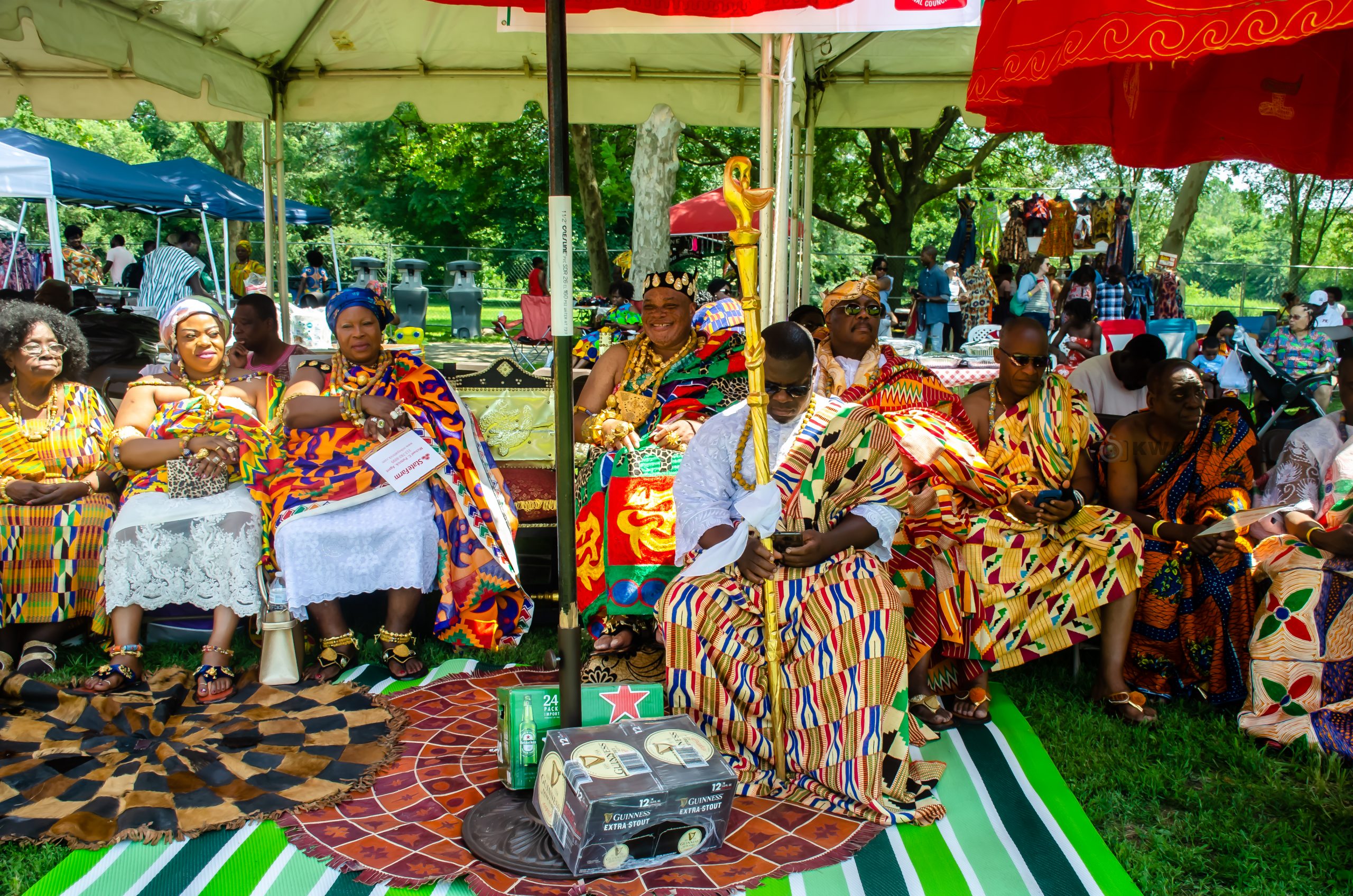
Traditional Ghanaian Kente cloth woven on narrow horizontal looms by Ashanti and Ewe artisans, featuring symbolic geometric patterns and kaleidoscopic colors like gold for wealth and red for passion.

Photo Credit: Diaspora Affairs Ghana

2. Aso-Oke (Nigeria - Yoruba People) 🇳🇬

Aso-Oke (meaning "top cloth" or "superior cloth" in Yoruba) is the hand-loomed cloth of the Yoruba people of Nigeria. It is traditionally reserved for significant ceremonial occasions—weddings, funerals, festivals, and chieftaincy installations.

  • Technique: Like Kente, it is woven on a narrow loom. However, Aso-Oke often features thicker, denser cloth, and its patterns are traditionally created by incorporating supplementary weft threads, giving it a distinct texture and luster.

  • Aesthetics: It is characterized by bold, generally vertical stripes that can be solid blocks of color or feature intricate woven motifs (like Elegbede or Olojongbo patterns). The finished material is very structured.

  • Symbolism: The colors and patterns are deeply symbolic of the occasion or the status of the wearer. The choice of Aso-Oke itself signifies respect for tradition and pride in Yoruba heritage.
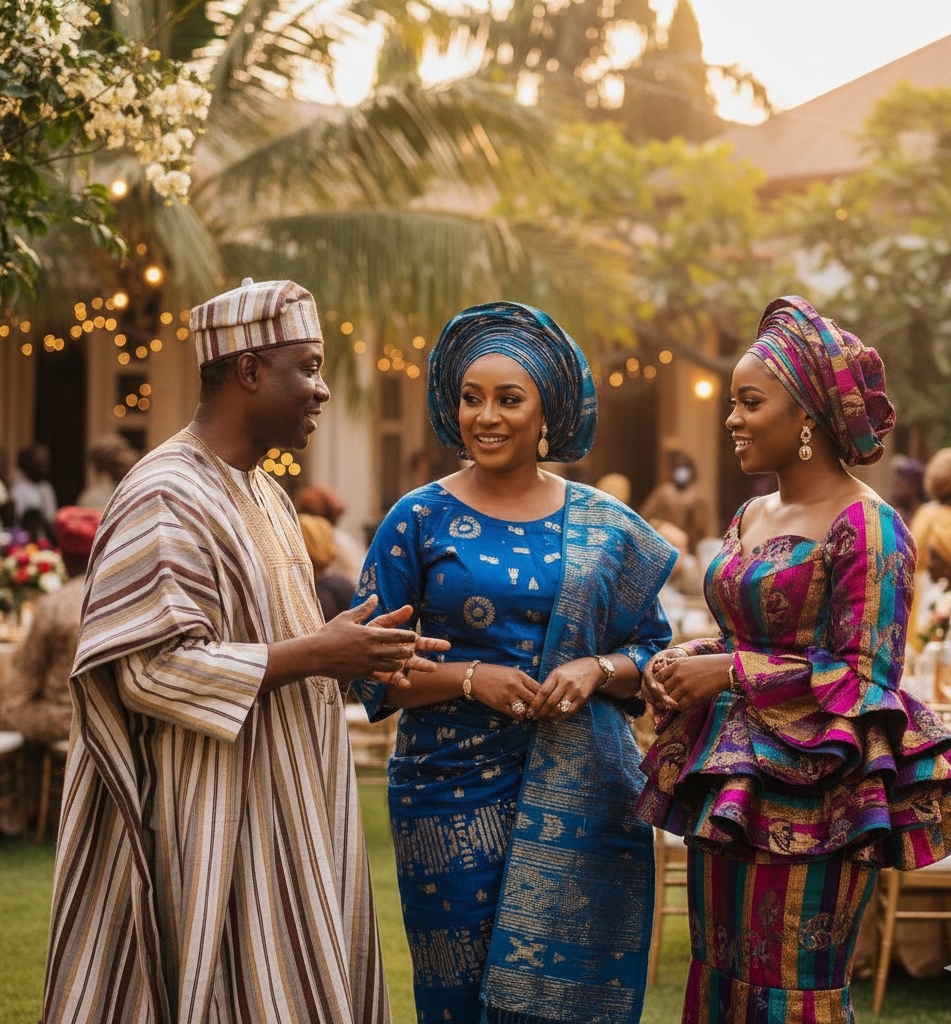
Yoruba people at a celebration wearing traditional Aso-Oke outfits including an Agbada and elaborate Gele headties, showcasing the structured texture and bold vertical stripes of the "superior cloth" from Nigeria.

3. Akwete Cloth (Nigeria - Ndoki/Igbo-Ndoki People) 🇳🇬

Akwete (sometimes spelled Akwete or Akwaete) is the distinctive hand-woven textile of the Igbo-Ndoki people of the Niger Delta region of Nigeria. This cloth holds a unique place due to its weaving technique and strong association with specific rites.

  • Technique: Akwete is traditionally woven on a vertical, double-heddle loom, which allows for much wider, more complex patterns to be integrated within the structure of the cloth itself, unlike the strip-assembly method of Kente or Aso-Oke.

  • Aesthetics: It features complex, often checkerboard, diamond, or geometric patterns woven directly into the cloth structure, creating a texture that is rich and sometimes three-dimensional due to the weaving style.

  • Symbolism: Historically, Akwete was so culturally significant that it was traditionally worn or used in ceremonies related to marriage and royalty, signifying the wearer's lineage and status within the community.
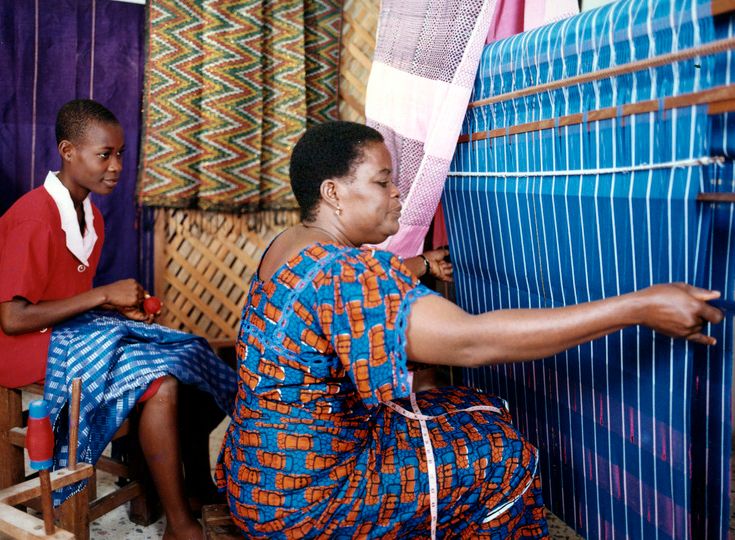
An artisan from the Igbo-Ndoki people in Nigeria weaving traditional Akwete cloth on a vertical, double-heddle loom, featuring wide, complex geometric patterns woven directly into the fabric structure.

Photo Credit: Connectnigeria Articles

Whether through the kaleidoscopic visual language of Kente, the structured prestige of Aso-Oke, or the intricate geometry of Akwete, these textiles are more than mere fabric—they are the woven soul of West African heritage. Each thread represents a legacy of craftsmanship and a profound connection to the history, status, and identity of the Ashanti, Ewe, Yoruba, and Igbo-Ndoki peoples.


The MLK "The African Echo" Quilting Workshop

How do we stitch a legacy of hope into a blueprint for the future?

In honor of Dr. Martin Luther King Jr., we are hosting a special workshop that bridges the gap between ancestral tradition and Afrofuturist vision. Using our signature "African Echo" quilt as our guide, we’ll explore how bold African textiles and intentional stitching can amplify Dr. King’s dream for a liberated tomorrow.

Join Here: https://quiltafricafabrics.com/drking-workshop

Echoes of Heritage BOM 2026 African-inspired quilt combining heritage motifs, modern appliqué, and storytelling through fabric.

👉 Start your journey with 2026 BOM Echoes of Heritage here:

https://bom.quiltafricafabrics.com/2026-bom-home

Echoes of Heritage BOM 2026 African-inspired quilt combining heritage motifs, modern appliqué, and storytelling through fabric.


Explore more from Quilt Africa Fabrics


A blog header graphic with the text “Insight Meets Inspiration—Join Miriam Galadima Benson and Dynamic Voices in the Quilting Community,” featuring vibrant African textiles and quilting elements that highlight creativity, culture, and community.

Join us on YouTube for the full Uncut Live experience: https://youtube.com/@quiltafricafabrics

African Fabrics

Discover Adire Story Cloths


Each fabric tells a tale. Handcrafted by Yoruba artisans, our authentic Adire Batik fabrics bring heritage, beauty, and inspiration to your quilting and sewing projects. Perfectly curated to carry tradition into your creative journey.

https://quilt-africa-fabrics.myshopify.com/collections/the-story-cloths-adire-african-batik

African Fabrics

Explore more high quality African fabrics here: https://quilt-africa-fabrics.myshopify.com/collections

Quilting Workshop

Learn From Leo Ransom Here: https://workshop.quiltafricafabrics.com/home-leo-ransom

African Fabrics Care

Learn Here: https://workshop.quiltafricafabrics.com/care-of-african-fabrics-every-quilter

summit speaker

What an incredible gathering it was!

The Quilt Africa Summit 2025 brought together quilters from all over the world for 3 unforgettable days of inspiration, creativity, and connection. From hands-on workshops and live demonstrations to vibrant showcases of African fabrics, the summit truly celebrated the artistry and stories woven into every stitch. 🌍🧵

💻 You can still experience the magic! All sessions and replays are available for you to watch inside the Summit Portal.

👉 Start your summit review here:

https://summit.quiltafricafabrics.com/2025-international-summit

Quilt Africa International Summit Experience

Be sure to follow us on our socials to keep updated on our latest deals and events:

Quilt Africa Fabrics

Facebook: https://www.facebook.com/quiltafricafabrics/

Facebook Group: https://www.facebook.com/groups/quiltafricafabrics/?_rdc=1&_rdr##

Instagram: https://www.instagram.com/miriam_quiltafricafabrics

As an African who was not familiar with the process of modern day quilting, Miriam was fascinated with photos of the beautiful quilts displayed in Pinterest. 

This led her to take the plunge and create her first quilt  in 2016, using online resources as there are no quilt shops in her country. 
As an architect, the creative process of quilting was familiar and she loved the fact that she could incorporate her culture. 

The process of creating that first quilt using the fabrics of her heritage led to the start of her business, Quilt Africa Fabrics. 

The scarcity of resources on quilting with African Fabrics was the deciding factor in birthing the African Fabrics Movement and launching the annual Quilt Africa Fabrics Online Show and the virtual Quilt Africa Fabrics Guild/BOM.
She considers herself honored and blessed  to be accepted by the quilting community.

She views her business as a vehicle for introducing and supplying the beautiful, bold and exciting fabrics of Africa to quilters and textile artists the world over. 

Miriam lives in Abuja, the capital city of Nigeria in Western Africa with her husband and 3 children who are very much a part of the African Fabrics Movement.

Miriam Galadima Benson

As an African who was not familiar with the process of modern day quilting, Miriam was fascinated with photos of the beautiful quilts displayed in Pinterest. This led her to take the plunge and create her first quilt in 2016, using online resources as there are no quilt shops in her country. As an architect, the creative process of quilting was familiar and she loved the fact that she could incorporate her culture. The process of creating that first quilt using the fabrics of her heritage led to the start of her business, Quilt Africa Fabrics. The scarcity of resources on quilting with African Fabrics was the deciding factor in birthing the African Fabrics Movement and launching the annual Quilt Africa Fabrics Online Show and the virtual Quilt Africa Fabrics Guild/BOM. She considers herself honored and blessed to be accepted by the quilting community. She views her business as a vehicle for introducing and supplying the beautiful, bold and exciting fabrics of Africa to quilters and textile artists the world over. Miriam lives in Abuja, the capital city of Nigeria in Western Africa with her husband and 3 children who are very much a part of the African Fabrics Movement.

Instagram logo icon
Youtube logo icon
Back to Blog