Meet the Aunties: African Fabric Quilting Community
More Than Family:
The Wonderful World of 'Aunty Culture'

African fabric quilting is not kept alive by platforms or programmes. It is kept alive by women.
The ones who finish their BOM blocks at midnight and post a photo to the group with a quiet "finally." The ones who write a comment on someone else's quilt that says exactly the right thing — not "beautiful!" but "I see what you were trying to do with that border, and it worked." The ones who email to say they told three friends about the summit and two of them joined.
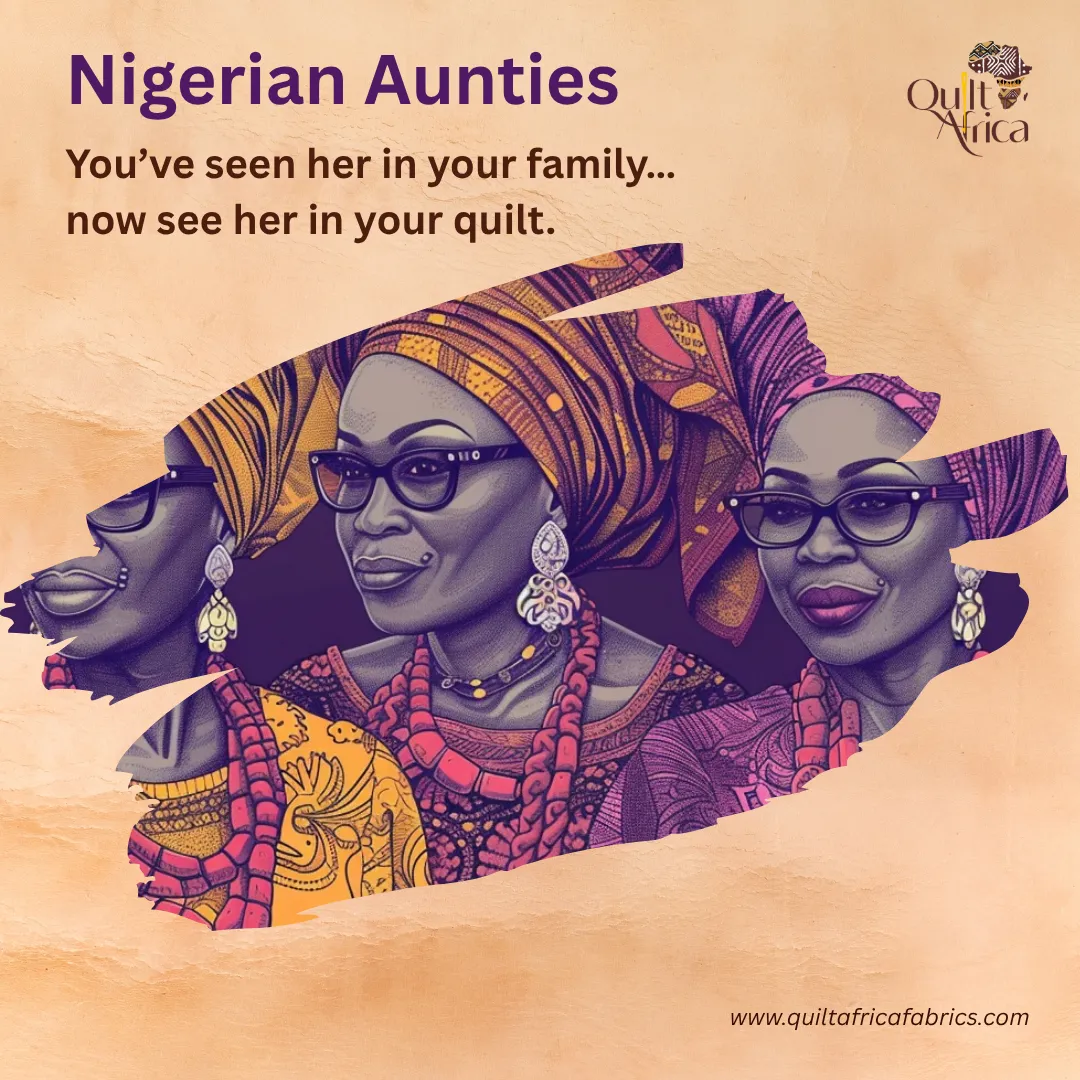
I call them the aunties of our Tribe.
If you did not grow up in Nigeria, you may need a moment with that word. In Nigerian culture — and across much of West Africa — "auntie" is not a biological title. It is a relational one. Any woman older than you who has earned your respect, who shows up for you, who feeds you whether or not you asked, who tells you the truth when everyone else is being polite — she is your auntie. You did not choose her. She chose you, quietly, by simply being present in the way that mattered.
The aunties of Nigerian life are the women who hold the extended family together. They remember birthdays and funerals with equal attention. They notice when you have lost weight. They bring food to your door without being asked and sit with you without needing to be entertained. They are the connective tissue of community — not the loudest voices, but the most constant ones.
And I do not give the Quilt Africa aunties that name accidentally.
I call them the aunties because that is what they are in every sense that matters: the women who show up, who hold the community together, who know everyone's name and notice when someone has gone quiet.
Every quilting community has them. Quilt Africa's aunties are something specific, though. They are quilters who love African fabric in a world that has not always made space for that love. Many of them came to Quilt Africa because they had been carrying bolts of Ankara and Adire for years — collected, admired, folded and stored — without anyone to make them with.
They found each other here. And then they became, to each other, exactly what the Nigerian auntie has always been: present, consistent, and quietly indispensable.

What the aunties actually do
It is worth naming, because it is easy to overlook.
They answer questions in the Facebook group before Miriam even sees them. They post their works-in-progress even when the blocks are not perfect — which gives everyone else permission to do the same. They send their guild friends the links. They renew every year not because they have calculated the return on investment but because they feel at home here and they know what it took to build this.
Some of them have been here since May 2020 — the first BOM cohort, some even before that when Quilt Africa opened it's virtual doors in 2017.
They watched this community come together from nothing, in the middle of a pandemic, while a Nigerian architect in Abuja was working twenty-hour days on her own savings to make it happen. They showed up then. They are still showing up.
A specific kind of loyalty
I want to say something honest here, because the aunties deserve honesty more than they deserve flattery.
The Quilt Africa community is not easy to maintain. We are spread across time zones — the United States, Canada, Australia, the UK, Nigeria, and places in between. We gather in a Facebook group, on Zoom, in email inboxes. We do not have a physical space where someone puts the kettle on and everyone pulls up a chair.
What we have instead is the aunties. They are the ones who make a digital community feel like a real one. When a new member posts her first block and says she is not sure it is good enough, it is usually an auntie who responds first — warmly, specifically, truthfully.
That is not nothing. That is everything.
This post is for you
If you recognise yourself in any of this — if you have been in the community for a year or two or five, if you know names in the Facebook group the way you know neighbours, if you have told someone about Quilt Africa because you genuinely wanted them to experience it — this post is for you.
You are the reason this works. Not the programmes, not the curriculum, not the summits — though we are proud of those too. You are the reason someone who joined three months ago feels like she belongs.
Thank you for that. It is not a small thing.
If you are not yet part of the Quilt Africa community, the door is open. The Block of the Month is where most of our aunties began — with one month's pattern, one live session, and the discovery that there were other quilters who loved African fabric exactly the way they did.
Or come and spend three days with us at the Summit in July. The aunties will be there. They always are.


