African Fabric Quilting Patterns: Improvisational Piecing Guide
Why You Should Break the Rules:
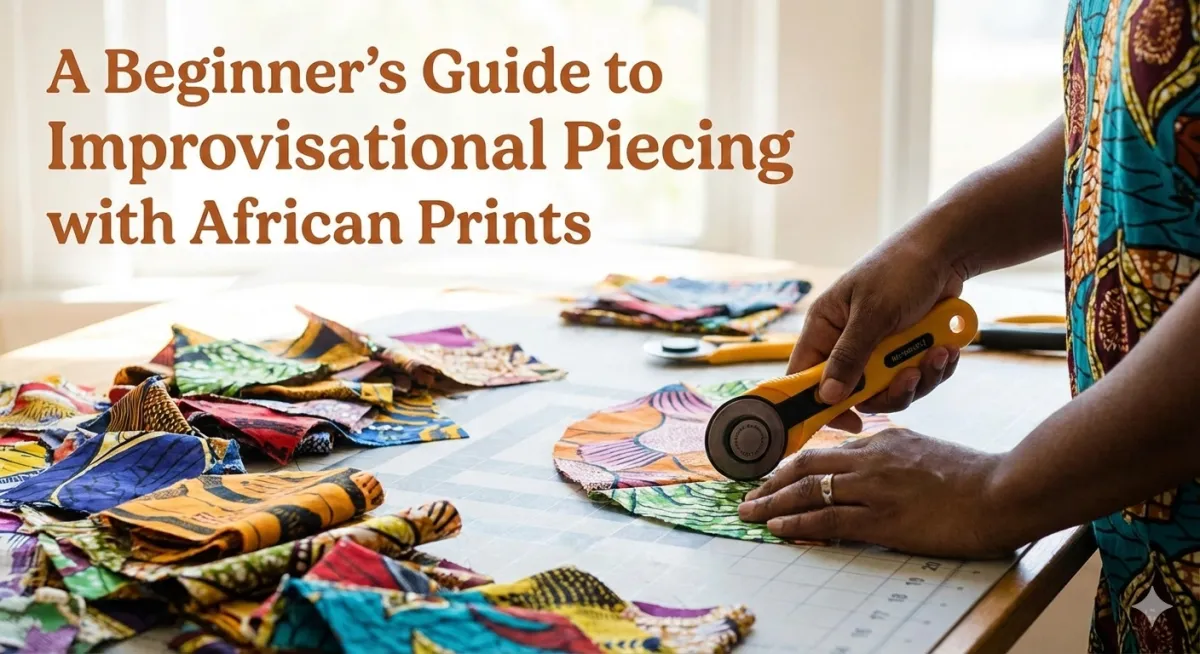
A Beginner's Guide to Improvisational Piecing with African Prints
African fabric quilting patterns do not always begin with a ruler. Some of the most beautiful quilts made with Ankara, Adire, and African wax prints are improvisational — cut freely, placed intuitively, sewn without a master plan. If you are new to quilting, this approach can feel alarming. But it is also one of the most liberating things you can do with a piece of cloth. This beginner's guide to improvisational piecing with African fabrics will show you exactly how to start.
That's the magic of improvisational piecing, and it’s a spirit deeply rooted in the textile traditions we celebrate, from Gee’s Bend to West African weaving. If you’ve been hesitant to step away from your pattern book, let me show you why grabbing your most vibrant African prints and embracing the "mistake" is the most creative move you can make.
Improvisation isn't about being messy; it’s about listening to the material and letting your hands lead your vision. It’s about trusting the rhythm you feel in the color and pattern of your African fabric.

The Fear Factor: Why We Stick to the Grid
For many of us, starting without a pattern feels like jumping off a cliff. We worry about wasting fabric, or worse, creating something that "doesn't match." This fear is often amplified when working with our precious, richly meaningful Ankara, Batik, or Shweshwe prints. We treat them like they must fit into a traditional European block structure.
Example: Think about a gorgeous piece of fabric with a striking, large-scale, asymmetrical motif. If you cut that into a standard 6-inch square, you’ve just chopped off the most important part of the story! Improvisation says: Keep the motif whole. Cut a rectangle or an irregular shape around it, and let that piece dictate the size and shape of the pieces next to it.

Three Steps to Unlocking Your Inner Improviser
Ready to give it a try? You don't need a whole new project; just approach your next block differently.
1. Choose Your Anchor Fabric: Select one piece of African fabric—one that simply sings to you. This piece will be the foundation. Don't measure it yet! Just place it on your design wall or cutting mat.

2. The Intuitive Cut: Look at the anchor fabric. If it’s a vibrant print with strong lines, cut your next piece to follow one of those lines, even if it makes a slightly odd angle against the first piece. If you’re using a batik with a beautiful color fade, cut the next piece to accentuate that fade, perhaps a long, skinny strip of deep indigo next to a bright gold.

3. Embrace the Seam Allowance: When you sew these first two pieces together, do not worry if the corners don't align perfectly. The beauty of improvisation is the visual "give" that happens when two distinct personalities meet at the seam. This tension is what makes the quilt dynamic, echoing the celebration of asymmetry found in many African design principles.

The masterpieces we celebrate from historical quilters were born from necessity, yes, but also from an absolute freedom to stitch what felt right in the moment. You have exquisite fabric and a rich creative heritage guiding you. Give yourself permission to stop measuring and start feeling your way through the design. Your next bold, vibrant quilt awaits!

Download the Free Guide: Before You Cut - 6 Things Every Quilter Needs To Know About Quilting With African Wax Prints https://quiltafricafabrics.com/before-you-cut-african-fabrics
Join our Facebook Group: https://web.facebook.com/groups/quiltafricafabrics/
Explore Quilt Africa Fabrics

Join us on YouTube for the full Uncut Live experience: https://youtube.com/@quiltafricafabrics

Be sure to follow us on our socials to keep updated on our latest deals and events:

Facebook: https://www.facebook.com/quiltafricafabrics/
Facebook Group: https://www.facebook.com/groups/quiltafricafabrics/?_rdc=1&_rdr##
Instagram: https://www.instagram.com/miriam_quiltafricafabrics


